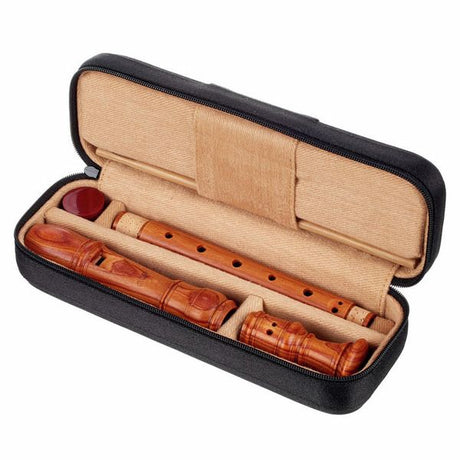
A first recorder is almost always plastic: sturdy, affordable, fine for early lessons. But anyone who keeps playing seriously, joins an ensemble or simply wants more tonal depth soon hits its limits. A wooden recorder is the next step.
We carry the three major workshops Mollenhauer, Moeck and Küng. This article explains why wood makes the difference for advanced players, how each wood sounds, and how to care for a wooden recorder properly.

Sturdy and low-maintenance
Ideal for: Early lessons, school, outdoors and damp conditions
See all Sopranblockflöten →
Warm, nuanced tone
Ideal for: Advanced players, ensemble, demanding repertoire
See all Blockflöten →01Why wood over plastic?
A plastic recorder is a fine starter instrument: insensitive to moisture, affordable and nearly indestructible. Tonally, though, it stays uniform. A wooden recorder sounds warmer, speaks more finely and responds far more sensitively to breath pressure and articulation. These are exactly the nuances you need once you are shaping music rather than just hitting notes.
For advanced players and ensemble playing this is the decisive difference: wood carries more subtly, blends with other instruments and gives your playing more expression. Anyone who has outgrown the school recorder gains noticeably in tonal quality with wood.
02The three workshops: Mollenhauer, Moeck and Küng
Mollenhauer and Moeck are the two major German recorder makers, with a long tradition and a broad range from school recorder to master instrument. Küng of Switzerland is known for very responsive, easy-playing instruments and is a distinct alternative in the advanced range.
Which workshop suits you best comes down to taste and playing feel; often the individual flute and the choice of wood matter more than the name on the body. The Mollenhauer 2246 Canta Altblockflöte and the Moeck Flauto Rondo Birnbaum Sopranblockflöte 2202 - Barocke Griffweise are solid entries into the wood class; the Küng STUDIO Altblockflöte Recorder 1401 Birnbaum shows the easy response of the Swiss build.


03The woods and their sound
Wood shapes tone and feel more than any other component. Maple is bright and light, sits comfortably in the hand and is a proven choice for clear, transparent sound. Pearwood sounds warmer and rounder with even density, a widespread all-rounder for advanced players. Fine woods such as rosewood, palisander and grenadilla offer a particularly carrying, overtone-rich tone and an elegant look, but respond more sensitively to care and climate.
A good order of progression: start with maple or pearwood for a reliable all-round tone, then move to a fine wood once you know exactly what sound you are after.
| Wood | Tonal character | Best for |
|---|---|---|
| Maple | bright, clear, light | first step into wood, transparent tone |
| Pearwood | warm, round, even | all-rounder for advanced players |
| Rosewood | warm and carrying | demanding repertoire |
| Palisander / Grenadilla | elegant, overtone-rich, carrying | master class, high demands |
04Ranges: soprano and alto
The soprano recorder in C is the familiar range from lessons and stays the natural choice in wood too if you want to keep the same fingering system. The alto recorder in F is the typical next step for advanced players: lower, fuller in tone and the central instrument for much of the solo and ensemble repertoire.
Many ambitious players end up owning both ranges. Anyone joining an ensemble can hardly avoid the alto; a fine fine-wood Moeck Rottenburgh Rosenholz Sopranblockflöte 4208, by contrast, only pays off once your tonal demands are clearly defined. You will find an overview of all models in the Altblockflöten collection.

05Care: oiling, warming, breaking in
Wood is alive, so a wooden recorder needs a little attention. Before playing, warm it up, ideally in your hand or against your body, so the cold wood does not condense too heavily on the first warm breath. A new flute is also broken in carefully: short sessions at first that are gradually increased, so the wood gets used to the moisture.
Regular oiling with a suitable recorder oil protects the bore and keeps the wood in shape. After playing, swab the flute out and let it air-dry. We carry the matching care oil and anti-condensation product for every flute.
Moving from plastic to wood is the most audible step in a recorder player's development. Pearwood or maple from Mollenhauer, Moeck or Küng make a reliable entry into the wood class; fine woods and the alto range follow as your own tonal demands become clearer.
Frequently asked questions
Is a wooden recorder worth it after the plastic school recorder?
Which wood is best for advanced players?
Soprano or alto for the next step?
How do I care for a wooden recorder properly?
Find the right wooden recorder
Mollenhauer, Moeck and Küng in soprano and alto, plus care oil and accessories.
Browse all recordersDiscover the alto recorderPassende Produkte
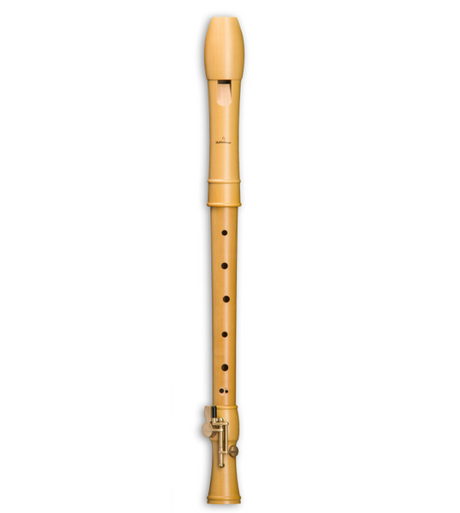
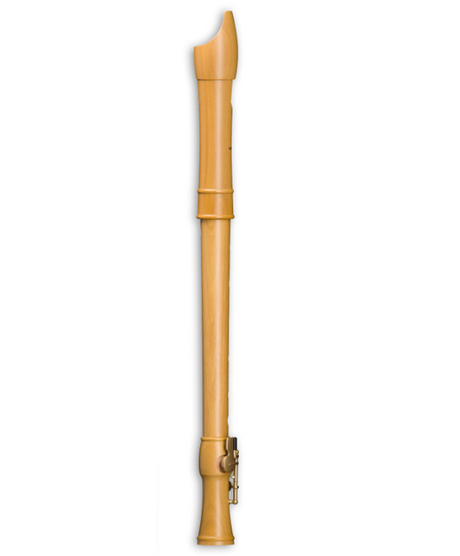
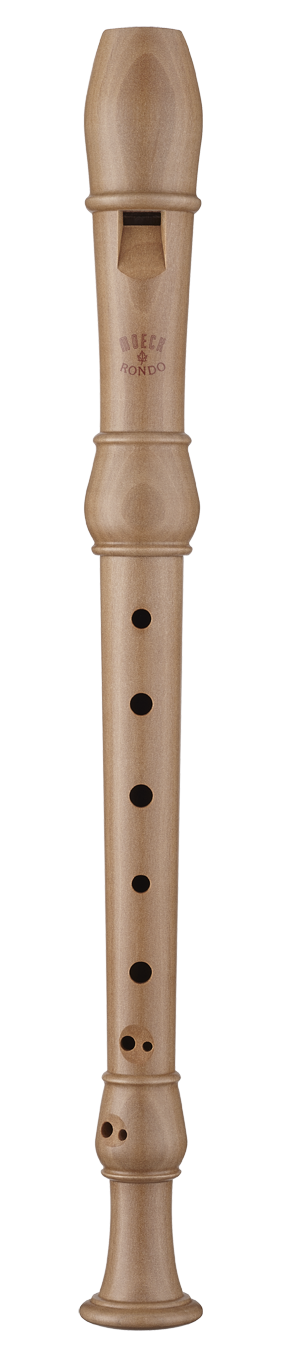
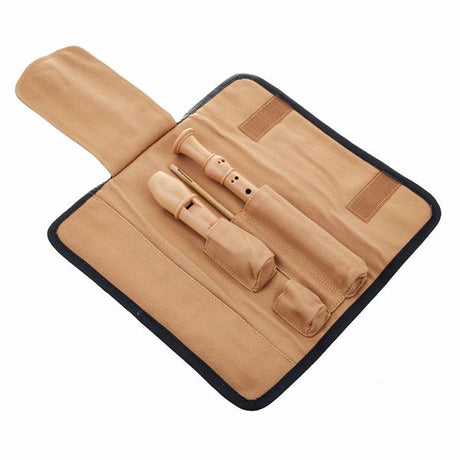
Moeck Rondo 2202 soprano recorder natural – baroque fingering, double hole, pearwood, two-piece

Küng STUDIO 1401 alto recorder in F – pearwood with baroque fingering (442 Hz, 3-piece, warm tone)