

Buying a classical guitar involves more than comparing brands or price tiers. Scale length, neck width and body size need to suit your posture and fretting hand. A 4/4 guitar is common, but it is not automatically the right size for everyone. This guide explains how to compare sizes and selected models using documented features.
01Start with size and playing position
A 4/4 label refers to full size. Yamaha lists the C40 with a 650 mm scale, 995 mm overall length, 370 mm body width and 52 mm nut width. These measurements help you compare instruments, but they do not determine fit on their own. Sit upright in a stable chair, hold the guitar in your usual position and check whether you can reach the first fret without sharply twisting your wrist or lifting your shoulder. A shorter scale may be worth comparing if a full-size body or reach feels awkward. Choose by posture and reach rather than by age or a blanket size rule.
| Example | Scale | Nut width / note |
|---|---|---|
| Yamaha C40, 4/4 | 650 mm | 52 mm nut width |
| Alhambra 1 C HT, 3/4 | 610 mm | Manufacturer identifies it as 3/4 |
02Nylon strings and a wider neck shape the feel
Classical guitars are designed for nylon strings. Yamaha explains that nylon needs room to vibrate and that a classical guitar neck is therefore wider than many steel-string acoustic necks. This is a construction choice, not a quality ranking. Consider the string spacing and your fretting technique. The room may suit chords and arpeggios; if you want a narrower neck or steel strings, compare a steel-string acoustic as a separate instrument family. String type follows the instrument’s construction and maker guidance. Use the same seated position for each size so the comparison stays meaningful.
03Compare models by documented features
The Yamaha C40 is a full-size example with a spruce top. The Alhambra 2 C pairs a solid cedar top with Sapelli back and sides. For the 4P, Alhambra lists cedar for the top and Indian rosewood for the back and sides. The Alhambra 1 C HT is a smaller 3/4 option with a solid cedar top and Sapelli back and sides. These are construction differences; they do not prove a universal sound winner. Compare size, neck feel and intended use first, then use material as one more selection point.
04Choose the configuration for your practice
For a first instrument, clear fit matters more than a long feature list. Decide whether you prefer a full-size or more compact body, whether a classical neck suits your hand and what you plan to play. Then compare examples: the Yamaha C40 as a full-size classical guitar, the Alhambra 2 C and 4P with their listed materials, and the 1 C HT in 3/4. A solid top describes construction; by itself, it does not prove that one instrument is better. Finish, setup and personal preference also matter and can vary by instrument.
05Explore other sizes and related guides
If a 4/4 guitar does not feel right, compare a shorter scale using specific model dimensions. The maker lists a 610 mm scale for the Alhambra 1 C HT 3/4. That figure applies to this model, not every 3/4 guitar. Our guitar-size guide focuses on fit, while the separate Alhambra overview looks at models within that range. Use the related pages for narrower questions and keep this article focused on the general buying choice.
Begin with scale, posture and fretting feel. Compare model features after that, without treating one material as a universal ranking. Full size is a common starting point, while a smaller guitar may fit better.
Frequently asked questions
Does a 4/4 classical guitar fit every adult?
What is the Yamaha C40 scale length?
Are classical guitars designed for nylon strings?
Is a solid top always better?
Compare classical guitars
Browse current models by size and construction.
All classical guitarsView Yamaha C40View Alhambra 2 CPassende Produkte


Yamaha C40 classical guitar 4/4 – spruce top, meranti back/sides, rosewood fretboard


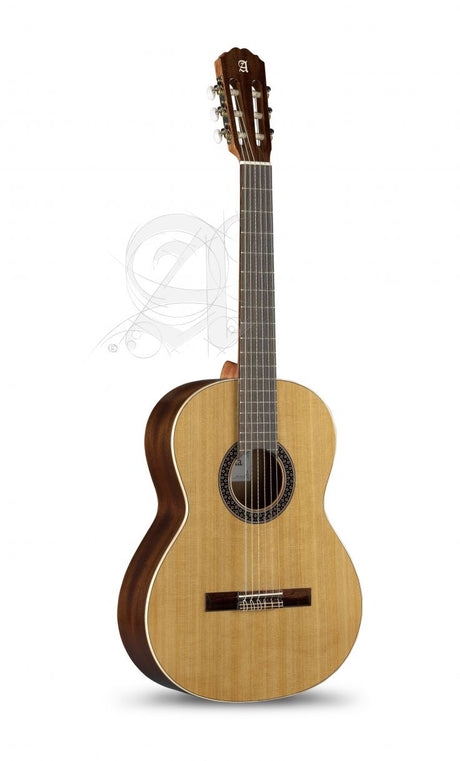
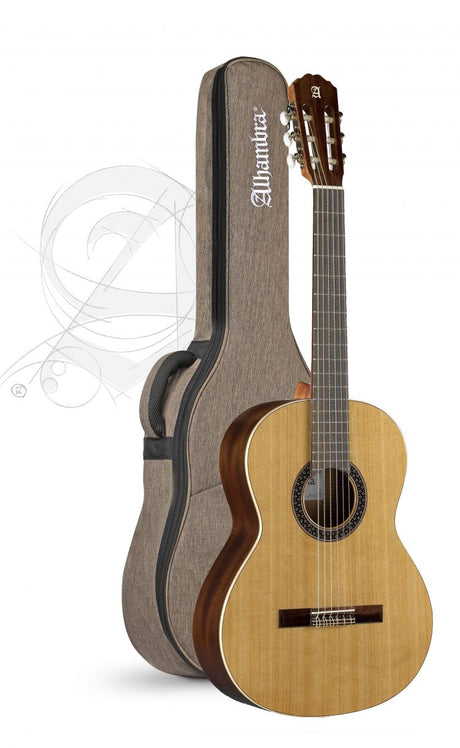
Alhambra 1C classical guitar 3/4 – solid cedar top, sapele back and sides, includes gig bag