

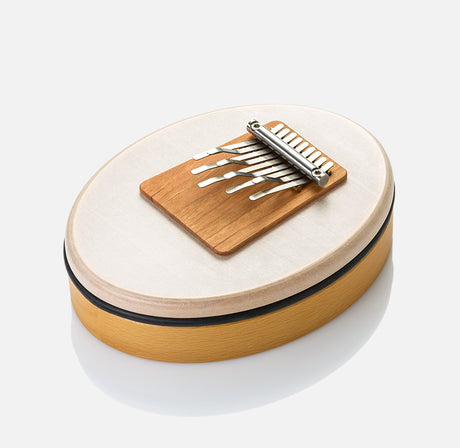
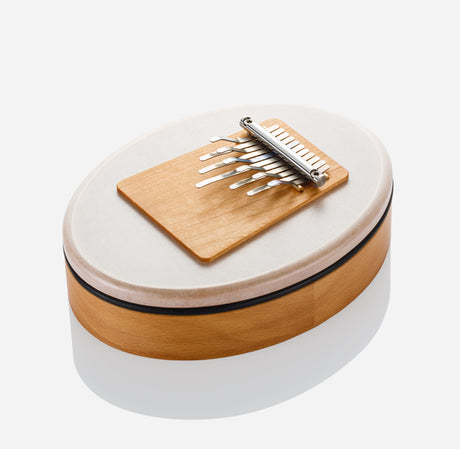
A sansula looks like a kalimba that someone mounted on a small hand drum — and that is exactly what it is. The Hokema sansula combines the plucked metal tines of a kalimba with the head of a drum frame. The result is a sound that floats: soft, spherical, with a long resonance that an ordinary wooden kalimba does not have.
This article explains how the sansula is built, why it sounds different from a kalimba and who it suits.
01What a sansula is — kalimba meets drumhead
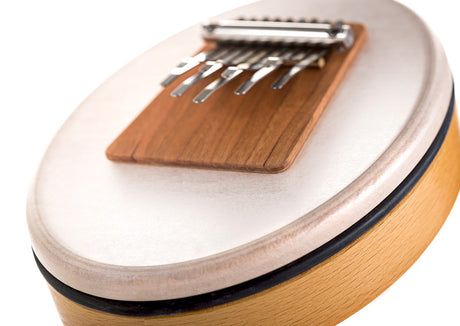
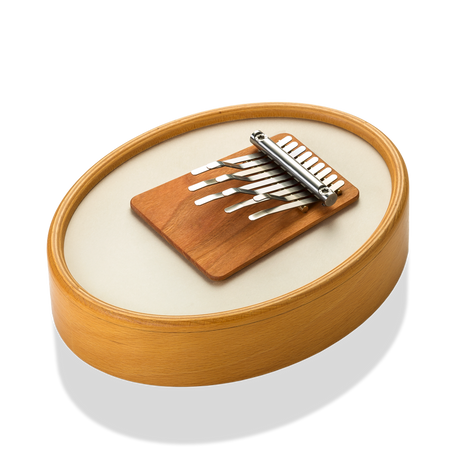
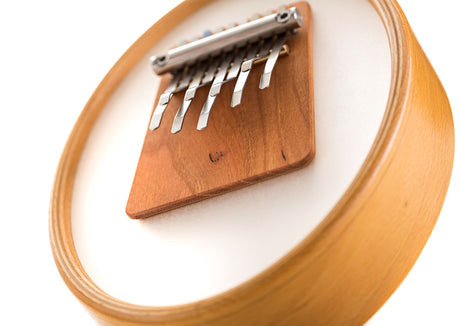
The sansula was designed by Peter Hokema and brings two instruments together in one. A drumhead is stretched over a round frame; on top sits the tine block of a kalimba with its tuned metal tines. You pluck the tines with your thumbs, just like on any kalimba.
The key difference is the resonating body. A classic kalimba sounds through a wooden body or board — short, percussive, bright. On the sansula, the vibration transfers to the stretched head, which resonates like a membrane. That is where the full, sustained tone with its long decay comes from.


02Why it floats — the sound and the wah effect
The drumhead gives the sansula a sound body with a character of its own. Notes blend, ring on and layer over one another — many describe the impression as spherical or floating.
There is also an effect no ordinary kalimba can produce: while playing, set the sansula on a smooth surface — a table, your knee, your thigh — then lift it again, and the resonating space beneath the head changes. This creates a soft wah, a vibrato you can use to shape the sound. Lifting and lowering the instrument becomes a means of expression in itself.
03Sansula or kalimba — the difference
Both instruments share the same playing principle: tuned metal tines, plucked with the thumbs, playable without prior knowledge. The difference lies in the sound body, and therefore in the character. You will find both instruments together in the Kalimbas & Sansulas category.
| Sansula | Kalimba | |
|---|---|---|
| Resonating body | drumhead (membrane) | wooden body or board |
| Sound character | floating, spherical, long sustain | bright, percussive, clear attack |
| Special feature | wah/vibrato effect by lowering/lifting | strong direct sound, robust |
| Typical tuning | A minor pentatonic (akebono) | various major and minor tunings |
| Common use | sound work, meditation, calm play | melody play, songs, on the go |
04Tuning and play — why everything sounds harmonious
The Basic sansula is usually tuned to A minor pentatonic (the akebono scale). That has a practical benefit: a pentatonic scale leaves out the semitone steps that can sound off. Whichever tines you pluck, the notes fit together.
That is why the sansula can be played straight away, without reading music. You follow your hand and the sound, not a sheet of notes. If you want to learn melodies or go deeper, the Conny Sommer - Das Große Lehrbuch für Kalimba & Sansula Melody offers playing ideas and pieces. Alongside the A minor version, the Hokema Sansula Basic Melody G-Dur 11 Zungen offers a more melodic tuning with more tines.


05Who the sansula suits
The sansula appeals above all to sound-minded players looking for a soft, sustained tone — unlike the brighter, more percussive kalimba. It is often played for relaxation, in sound work and in meditation, because its long, calm decay fits that setting.
For carrying it and protecting the head, a matching bag such as the Hokema Sansula Tasche für Basic 9Ton is recommended. If you are still torn between the sansula and the classic kalimba, you will find both in the Kalimbas & Sansulas category.
The sansula is not a replacement for the kalimba but its sonic extension: the same simple playing principle, yet a full, floating tone with long decay and the characteristic wah effect. If you want a calm, spherical sound, this is the right choice — if you prefer the bright, percussive direct sound, stay with the classic kalimba.
Frequently asked questions
What is the difference between a sansula and a kalimba?
How does the sansula's floating sound come about?
Can you play the sansula without prior knowledge?
What tuning does the sansula come in?
What is the sansula most often used for?
Discover the sansula
Browse Hokema's sansulas and the matching kalimbas — from A minor pentatonic to more melodic tunings with more tines.
All sansulas & kalimbasHokema Sansula Basic A minorPassende Produkte

Conny Sommer - The Great Textbook for Kalimba & Sansula Melody
